


He’s 29, healthy overall, but he’d been fighting poor sleep for eight years—mostly anxiety keeping his brain spinning at night. He asked about epitalon, side effects, and whether I’d written it up.
I hadn’t, because I’ve grown a bit burned out on the deep end of esoteric health stuff. But his note made me realize it was time to share the full story.
This isn’t medical advice. Please do your own research and talk to a doctor, but here’s what turned things around for me in my mid-30s.
The Problem: Waking Up Like I Never Slept
Sleep looked fine on the surface. Bed at a decent hour, out cold instantly, eight solid hours. No waking up in the middle of the night.
But mornings? I’d drag myself up feeling like I’d skipped rest entirely. Groggy, flat, no real recovery.
Oura Ring data confirmed it: often just 30 minutes of REM. That’s low. Most people need 90-120 for proper brain repair and feeling sharp.
Deep sleep was mediocre too. This was quietly wrecking my recovery, hormones, and even fat loss before cycling season.
At 36, I decided enough was enough.
2026 goal: fix the sleep, spend whatever it takes.
The Basics That Helped (But Didn’t Fully Solve It)
I started with the obvious stuff. These aren’t flashy, but they matter:
Blue light blocking glasses after 7 p.m. worn religiously. Cuts the screen glow that keeps your brain wired.
Incandescent bulbs in the bedroom only. No more harsh LEDs messing with melatonin.
Removed wireless junk: WiFi node, wireless chargers. Switched to wired. Less EMF noise in the sleep space.
Note: I did not take melatonin. I wanted to solve the cause, not paper over with hormones.
These moves made nights more consistent, but it was still patchy. Good weeks mixed with bad ones. The root issue felt deeper. And the more I investigated the clearer it became.
A circadian rhythm thrown off by years of modern life, stress, and inconsistent signals.
The Game-Changer: Russian Peptides (Epitalon and Pinealon)
A friend, Dr. Abud Bakri on X, tipped me off to two well-studied Russian peptides: epitalon and pinealon.
These are short amino acid chains, taken as oral pills (no injections needed). They’re not marketed as pure “sleep aids.”
They’re longevity compounds from the work of Vladimir Khavinson, but sleep improvement is a big practical win.
Epitalon stands out for resetting your internal clock. Its strongest mechanism is restoring melatonin production in the pineal gland and normalizing cortisol rhythms.
Epithalon (also known as Epitalon or Epithalone) is the synthetic version of
the polypeptide epithalamin, which is naturally produced in humans. This
pineal peptide preparation is secreted in the epithalamium-epiphyseal region
of the brain.
Epithalamin increases a person’s resistance to emotional stress
and also acts as an antioxidant. It is a bioregulator for the endocrine system,
especially for the pineal gland, and has been shown to lengthen telomeres in
human cells. It also reduces lipid oxidation and ROS and normalizes T cell
function, which helps with cell repair.
Additionally, it has restored and
normalized melatonin levels in older people who have lost some pineal
function due to aging.
(Seeds, William. 2020. Peptide Protocols. Vol. 1)
A 2001 study on older monkeys showed epitalon significantly boosted evening melatonin and straightened out cortisol patterns. This is exactly what many of us in our 30s need after years of disruption.
In plain terms: it helps your body make its own melatonin on schedule instead of you forcing it with supplements. That leads to better sleep architecture = more REM, deeper rest.
Plus the downstream perks like sharper recovery, balanced hormones, and easier weight management.
I did 30 days of epitalon, followed by 30 of pinealon. Typical dosing for sleep (per user reports and docs) lands around 3-6mg oral in the evening. Results showed up reliably: 1.5 hours of REM most nights, 1.5–2+ hours deep.
Mornings feel genuinely restorative now.
Side effects? None for me. Some people feel wired initially (circadian reset kicking in) and shift to morning dosing. It does settle.
Others notice nothing if their sleep issues aren’t primarily circadian. Pinealon can be more brain-focused (antioxidant effects, less direct on sleep for everyone). Always source carefully and start low.
There’s buzz around a potential FDA hearing on epitalon for insomnia this July. Interesting times if that pans out.
The Boomer Angle
As I have increasingly fixed the issues I face and up-leveled my health, I now look to my parents’ health when reviewing esoteric health interventions. And let me tell you, the research on epitalon and pinealon in old age is incredible.
Let’s put away for the moment that we’ve started talking about sleep, and let’s just think about what these peptides actually do for you.
Applications:
Decelerates aging
Suppresses tumor development
Induces telomerase activity
Induces telomere elongation
Prevents chromosome fusion
Decreases incidence of spontaneous radiation in carcinogenic tumors
Normalizes reproductive system in senescent animals
Improves antioxidant defense
Normalizes melatonin levels
Improves cortisol secretion consistent with circadian rhythm
Improves insulin sensitivity
(Seeds, William. 2020. Peptide Protocols. Vol. 1)
These are all things any parent/person above 65 can use help with. And we’re talking about a single pill you take for 30 days a year. Not bad. But here’s what Khavinson found:
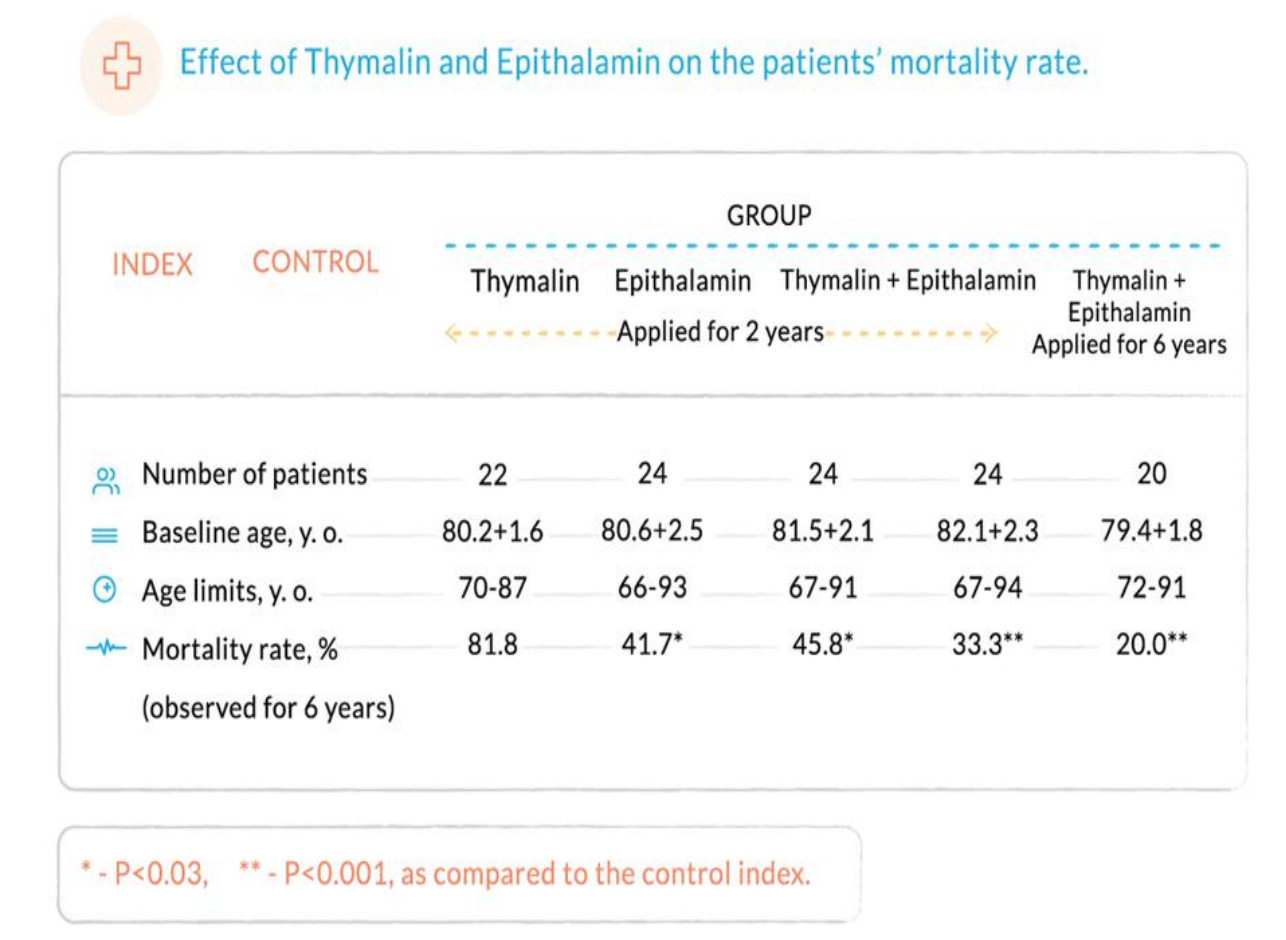
Yes for $200 a year I will be giving this to my parents and in-laws and forcing them to take it. (Even my mother-in-law).
Bottom Line
If you’re in your 30s, grinding through life, raising kids and sleep feels broken despite the basics, something like epitalon might address the root instead of masking symptoms.
Pair it with the simple habits like light management, no wireless clutter and give your body a fair shot at real rest. Max tried it and was excited to start; hope it serves him (and you) well.
In typical pattern - civilization is trashing our sleep, it’s time to become uncivilized.
I keep hammering this: you need to find out your chronotype & respect it. The reason melatonin "works" (to paper over, as you correctly) for so many people is that they're completely out of sync with their individual circadian rhythm.
If you're a night owl, you're a night owl. You can't change that, it's genetic. Same for larks. People underestimate how widespread relatively moderate variance in circadian rhythm is, and how extreme they can get. My "natural" wakeup time is 9:30-10:30 and I can't fall asleep before midnight even on camping trips w/o ANY artificial light. This is not even extreme, I am only a mild night owl.